How loft traps warmth beneath outer clothes
A base layer works by holding still air against your clothes rather than packing extra weight into the weave. We knit and sew pieces for cold mornings, quiet evenings at home, and long days outdoors. Here is how loft works across our thermal tops, fleece lined leggings, and oversized blanket hoodies.
Trapping still air inside the knit
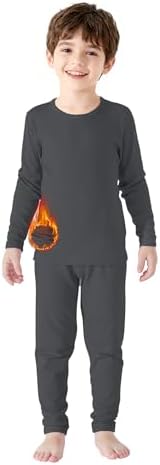
Warmth comes down to trapped air. When yarn is brushed on the inside face, tiny fiber ends stand up off the backing. That creates loft. Air settles into those spaces and stays quiet between the knit and your outer clothes. A thin brushed layer holds more warmth than a thick flat piece of the same weight because the flat surface lets air shift freely. We brush the inner face of our thermal pieces so you get that loft without adding bulk under a heavy coat or a pair of work trousers. It is a mechanical way to hold heat right where cloth meets cloth.
Checking inner lining from hip to ankle
Look closely at how a piece is finished inside before you choose it. Some leggings carry a brushed fleece lining down the entire leg, right to the ankle cuff. Others stop the lining at the knee to leave the lower leg thin for tall boots. Check the waistband construction as well. A waistband with elastic running through the whole band stays flat against the waist, while an elastic insert placed only at the back gathers cloth differently. On hooded pieces, look at whether the hood carries a lining or stays single layer cloth, which changes how it sits on the neck.
Keeping the fit close to work
A base layer needs to sit close to the body to do its job. If the knit hangs loose away from your clothes, cold air moves through the gap and clears out the warm zone. A loose thermal top is simply a long sleeve shirt. We cut our base layers with stretch so the cuffs sit flat at the wrists, the collar stays close around the collarbone, and the hem stays tucked beneath a waistband. When the fabric rests flat against you, the lofted inside face can hold that pocket of still air without drafts breaking in from the hem or cuffs.
Cutting an oversized blanket hoodie wide
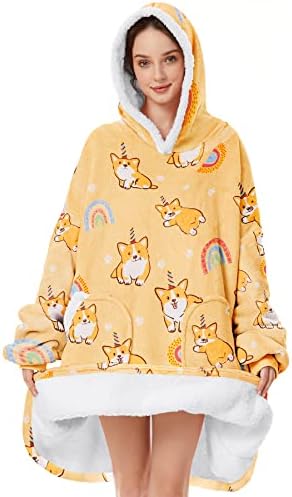
A blanket hoodie is built on the opposite idea. We cut these pieces wide through the chest, deep under the arms, and long in the body so you can pull your knees up inside the hem. The loose shape lets a large volume of air sit between you and the outer fleece while you sit on a sofa or work at a desk. That generous cut makes it very warm for sitting still, but it rules the piece out for wearing under a winter coat. The extra cloth gathers at the elbows and bunches at the waist if you try to layer over it.
Caring for brushed fleece over time
Brushed fibers need simple care to keep their loft. Wash these pieces in cold water and hang them to dry on a line or lay them flat. High heat in a dryer can melt or mat down the raised fiber ends on the inner face, turning that soft loft into a hard, flat surface that holds far less air. Cold washing also keeps the elastic in the waistband and cuffs from losing its recovery. Taking care of the inner fleece keeps the knit working the way it did when it first came off the sewing machine.
- Our catalogue holds 153 pieces across 8 sections sorted by weather, wearer, and use.
- We cut 13 thermal base layers, fleece lined leggings, oversized blanket hoodies and wearable throws.
- Brushed fleece creates loft by raising fiber ends to hold still air inside the cloth.
- A base layer must sit close to the body to trap air beneath outer layers.
- Oversized blanket hoodies are cut wide for sitting still and cannot fit under winter coats.
Finding our pieces on the storefront
We knit and sew these pieces for real weather and everyday use. You can view all our thermals, leggings, and loungewear on the storefront that carries our pieces. Choose the cut that matches how you plan to layer, whether you need a close base knit or a wide blanket hoodie.
See thermals & blanket hoodies